Bay Area homeowners are transforming their outdoor spaces in 2026. The trend is clear: gardens are no longer just about visual appeal—they’re about utility, flavor, and sustainability. Enter the edible ornamental landscape, a growing movement that blends beauty with bounty. Instead of purely decorative shrubs, modern gardeners are demanding plants that not only elevate the aesthetics of their yards but also produce fresh, homegrown fruit.
The heroes of this trend—columnar apple trees, espaliered peaches, and dwarf figs—offer striking structure while providing a delicious harvest. And for those looking to get ahead, February is the perfect month for bare root planting at Central Wholesale Nursery in San Jose, when the widest selection and highest success rates are available.
Structure & Style: Compact Varieties That Shine
Urban gardens and small yards often pose a challenge: how do you fit fruit trees into limited space without sacrificing style? The answer lies in compact, carefully trained varieties that combine form and function.
The Vertical Powerhouse: Columnar Fruit Trees
Columnar fruit trees are vertical marvels. These trees grow straight up, producing fruit directly along the main trunk and requiring only 2–3 feet of lateral space. They are perfect for small yards, side pathways, or flanking entrances. Imagine a hedge of columnar apples or pears that not only looks tidy and elegant but also feeds your family each season.
The Living Sculpture: Espalier Techniques
Espalier is an ancient technique that transforms fruit trees into living sculptures. By training trees to grow flat against a wall or trellis, gardeners create stunning 2D structures that save space and add a Mediterranean flair. Ideal for narrow strips along fences or sunny walls, espaliered peaches, pears, or apples provide both ornamental appeal and a practical harvest.
Container Kings: Dwarf and Miniature Varieties
For patios, balconies, or decks, dwarf and miniature fruit trees are a game-changer. True dwarf varieties, such as Miniature Nectarines or Dwarf Plums, thrive in containers while offering a full fruit yield. These trees prove that with the right approach, almost any Bay Area home can enjoy homegrown fruit, no matter how compact the space.
The Bay Area’s Best Edibles
Choosing the right fruit trees for your microclimate is key to success. The Bay Area’s moderate chill hours and diverse environments allow gardeners to grow a variety of productive, ornamental trees:
- Dwarf Citrus: Perfect for container culture, dwarf oranges, lemons, and limes add vibrant color and fragrance to any small yard.
- Low-Chill Peaches and Nectarines: Varieties like ‘Bonanza’ Miniature Peach or ‘Snow Queen’ Nectarine flourish with minimal winter chill.
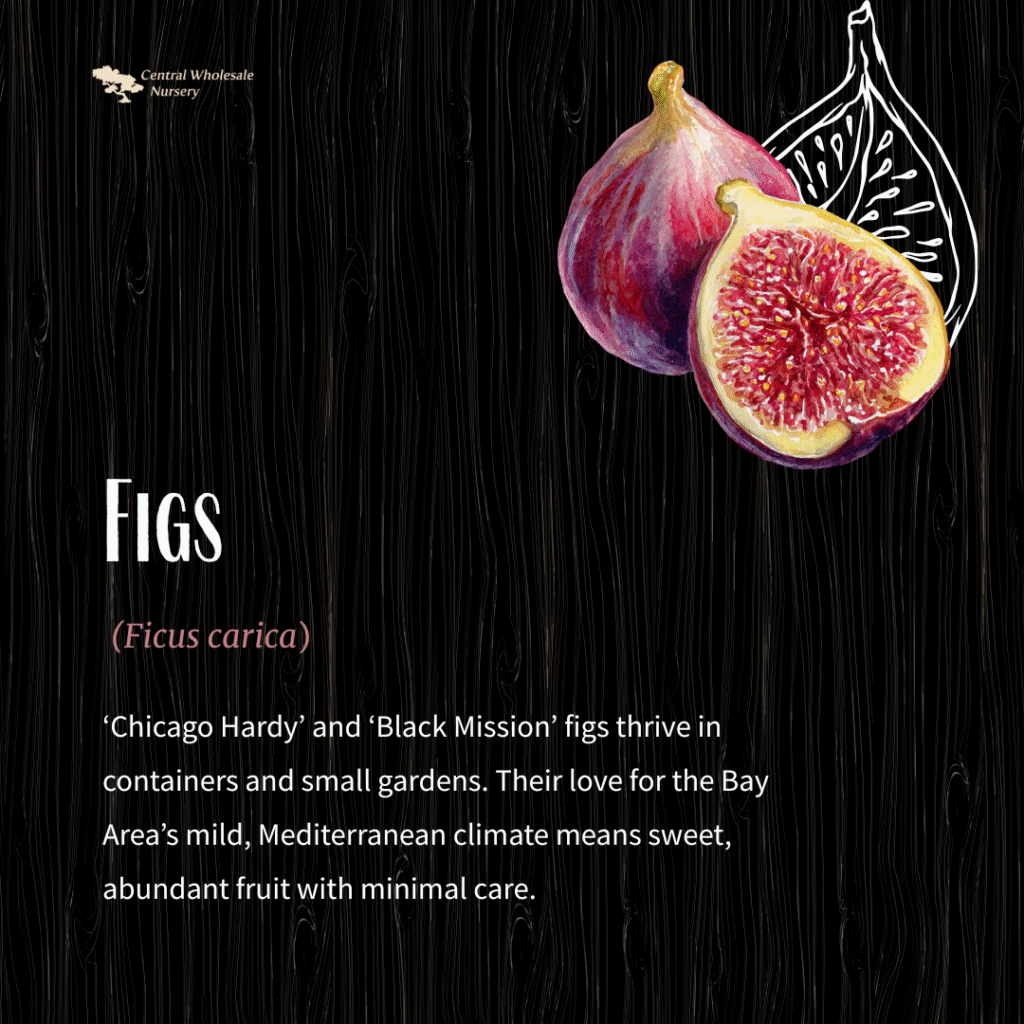
- Figs: ‘Chicago Hardy’ and ‘Black Mission’ figs thrive in containers and small gardens, offering bountiful harvests.
- Pluots and Interspecific Hybrids: Modern favorites such as ‘Flavor King’ and ‘Dapple Dandy’ combine sweetness and adaptability.
With careful selection, even the tiniest urban gardens can produce an impressive, edible bounty while maintaining a polished, ornamental appearance.
The February Advantage: Why Bare Root is Best
If you want your edible ornamentals to thrive, timing matters. Bare-root trees—dug up while dormant without soil—are available only in winter, making February the ideal month to plant.
Why February?
- Peak Selection: Nurseries like Central Wholesale Nursery offer the widest variety of unique, compact, and dwarf trees during February. Wait too long, and the trees are potted up, limiting options.
- Zero Transplant Shock: Planting dormant trees ensures they establish roots in your yard before sprouting leaves. This leads to a higher success rate—often over 90% with proper care.
- Quick Success Tips: Prevent root drying by soaking bare root trees before planting and ensuring immediate installation in your garden. Consult the UC Master Gardeners of Santa Clara County for specific regional planting depths and soil prep.
Where to Find Your Edible Ornamentals
Finding the right trees is just as important as planting them correctly. Central Wholesale Nursery in San Jose is the ultimate destination for Bay Area gardeners seeking high-quality, compact fruit trees.
- Selection: The nursery offers an unparalleled variety of dwarf and bare root stock during the winter months, from columnar apples to espaliered peaches and dwarf citrus.
- Expertise: Knowledgeable staff guide gardeners on the best trees for their specific USDA Plant Hardiness Zone, ensuring every plant thrives in its new home.
Conclusion: Plant Beauty, Harvest Bounty
The future of Bay Area gardens is both beautiful and productive. By integrating compact, ornamental fruit trees into your landscape, you can enjoy stunning visual appeal and a delicious homegrown harvest. February is the perfect month to seize this opportunity, especially with bare-root stock available at Central Wholesale Nursery.
Visit Central Wholesale Nursery on McKinley Avenue in San Jose this February to explore the region’s largest selection of bare root, edible ornamentals.
Start planning your 2026 harvest today and transform your garden into a space where food meets form.
Have any questions for us? Don’t be shy, contact us!
🌱 Visit Central Wholesale Nursery Today